Use Language Arts Project for Defiant Student to Do at Recess
When Children Are Defiant
 I one time taught a second grader who sometimes subtly refused to go forth with what nosotros were doing. For instance, if we had to go out the classroom and John didn't want to go, he'd get in line—but and so walk as slowly as possible. The more his classmates and I urged him to walk faster, the slower he would go. At each deliberate step, I could feel my blood pressure rise. But in that moment, I could practice picayune. I couldn't physically make John walk faster; nor was he ready to rationally talk over his feelings or options. Rarely did a student's behavior get to me, but John's resistance always did.
When children are defiant, their goal is not to badger, disrespect, or frustrate usa. Rather, their goal oft is to feel significant. Yet their disobedience threatens our ain like demand. As we both strive to feel meaning, nosotros tin can easily get enmeshed in a ability struggle. How do yous know you're in a ability struggle? You experience as if you're being tested (which you lot are), and you get angry or irritated. You may even want to dominate the child to prove you lot're the boss. But teachers never win power struggles. Once you're in one, you've lost. And then has the kid: No one wins a ability struggle.
The all-time way to avoid ability struggles and help a child who defies dominance is to calmly work with him in means that honor his genuine need to feel significant. Also critical is demonstrating that y'all even so hold him (and everyone in the course) answerable for following the rules. And of course it's all-time to help the child avoid defiance mode in the offset place.
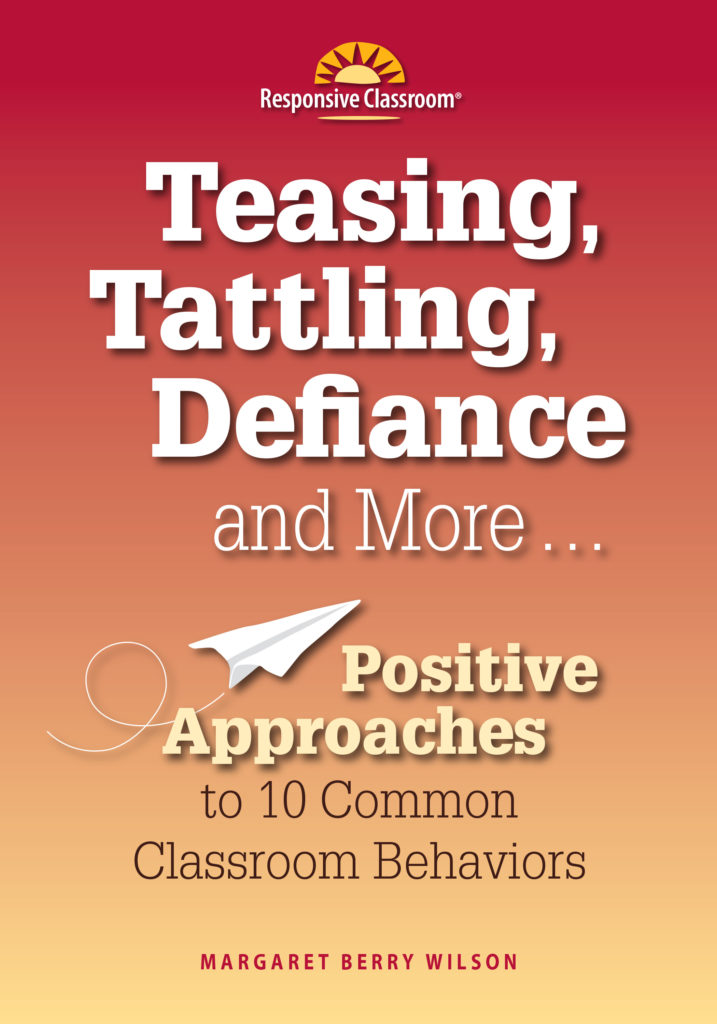
But how do you do all that while keeping your cool? Hither'south a sampling of the practical techniques for addressing defiance presented in my volume, Teasing, Tattling, Defiance, and More: Positive Approaches to x Common Classroom Behaviors.
Preventing Defiance
The more yous proactively give children effective ways to experience personal power, the more than cooperative they'll be. Here are some proactive steps to try:
Build a Positive Instructor-Student Relationship
Although this advice applies to all students, it's crucial for students who tend to act defiantly. These children need to feel that despite any difficulties, yous'll however care nigh them, recognize their successes, and actively include them in the classroom customs.
To build strong relationships, remind yourself that all children, including those who frustrate you lot, accept positive attributes. Make a point of learning almost your students' interests, and channel their talents in means that foster their sense of significance. For example, a kid who's practiced with her hands could be called on to fix stuck door latches or other small mechanical problems in the classroom.
Reinforce Progress and Effort
All children, only especially those who struggle with defiance, need to hear when they're doing well and where they're improving. Brand a point of noticing the child's successes (big and pocket-size) in post-obit directions, transitioning smoothly, or doing anything that usually might invite resistance. Reinforce the beliefs by letting the kid know yous noticed, but do it privately to avert calling attention to the kid and inviting comparisons with classmates, and be specific. Whenever possible, too note how the cooperative behavior helps the child and others. For case: "When you lot get in line quickly, everyone has more time for recess" or "When you helped Kevin this morning, I recollect he felt valued. You were living out our rule to 'take intendance of each other.'"
To avoid suggesting that pleasing you is what'due south most important, steer clear of phrases such as "I like," "I want," and "I appreciate" when reinforcing positive beliefs. A child who'due south sensitive to beingness told what to do may feel manipulated by "I" statements.
Teach How to Disagree Respectfully
Information technology's empowering for all children—specially those who struggle with potency—to know that they may disagree with adults. Of course, allowing students to disagree doesn't hateful accepting all forms of disagreement. Role of becoming a contributing member of a autonomous guild is learning how to disagree respectfully.
When teaching children appropriate ways to disagree, make articulate that in the moment, they still need to follow directions and rules. Let them know that later they can hash out what they think was unfair and what should be changed.
Teach children safe and respectful means to show their disagreement, such as using respectful words and phrases like "I feel that" and "I advise," or writing a letter to y'all or dropping a note into a Complaint Box. Exist sure to model these methods before expecting children to use them.
Channel Children's Energy in Positive Directions
Children who challenge authority are oftentimes quite adept at taking on bigger causes. Working on issues they consider of import tin assistance focus their free energy and build their sense of significance. Offer assignments such every bit writing letters to the schoolhouse or town paper, community service projects, or researching an environmental issue.
De-escalating Defiance
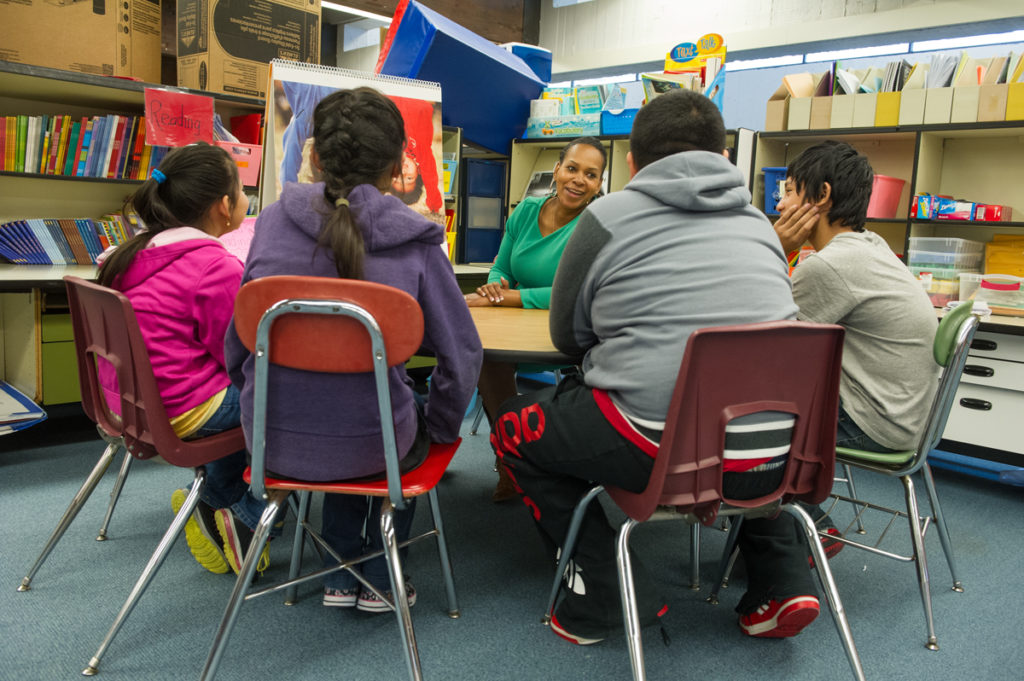 When a child is being defiant, you need in a higher place all to keep her (and her classmates) prophylactic while giving her a adventure to absurd down. These general guidelines will help you and the child navigate episodes of defiance:
- Avert doing anything that will heighten the kid's stress and invite more resistance. But put: Don't push her buttons.
- Don't try to reason or make an emotional appeal to win the kid over. While in the midst of disobedience, he volition likely exist unable to answer to you in a positive way.
- Slow downward. Waiting a few seconds (if prophylactic allows) before you say or do anything lets the child regain her ability to cooperate and likewise lets you appraise the situation calmly and objectively.
- After an incident, reflect on what preceded it. Eventually, you lot'll brainstorm to recognize the situations that set off the child's defiance (such as unexpected schedule changes) as well as the signs that he'due south becoming uncomfortable (such as opening and closing his fists or avoiding eye contact).
Following are some specific steps y'all can accept to guide a child past active defiance.
Intervene Early on—With a Respectful Reminder or Redirection
When y'all first see signs that a child may become defiant, respond as shortly as you can with respectful reminders or redirections. If you lot wait until a child has dug in his heels, he will probable exist less able to respond rationally to your directions.
Students who have difficulty cooperating can exist especially sensitive to being ordered around. Call back to:
- Be cursory. Avert lectures and sarcasm.
- Speak calmly and matter-of-factly.
- Use short, direct statements.
- Avert questions (unless you volition take any answer).
- Keep your body language neutral.
For example, to a child who's challenging directions past standing up and yelling, you might quietly say, "Andre, take a seat. You can read or draw for now."
When Using Consequences, Offering Limited Choices
One time a child has go defiant, you may decide to use consequences. Recollect, though, that children who struggle with defiance are often seeking power. Offer a pick betwixt a couple of consequences (instead of giving a "do this" order) lets the child hold on to her sense of significance and nobility and teaches her (and the class) that she's all the same existence held accountable for her behavior. For example, when Anna refuses to motility during a transition, you might say, "Anna, either y'all tin can come up with us now, or I can have [name colleague] come up sit down with you. Which practice you choose?"
Avoid Negotiating in the Moment
One time a child has defied you lot, decide on a redirection or consequence and remain firm in your decision. Negotiating during the incident volition invite further testing. It too sends the message that children tin avert a redirection or consequence by resisting.
If you lot do find yourself in a power struggle, take a deep breath and disengage. Let the child (and the whole class, if watching) know that you lot're finished talking for now and volition accost the event subsequently the child calms downward. For instance: "Max, we're done talking about that for now. Everyone, get your writing journals out and beginning on your stories from yesterday."
Give the Kid Time and Space
Once yous've given a reminder, redirection, or consequence, be sure the child follows it. But physically step back to give him more space—literally and emotionally. Doing and then lessens the sense that you're trying to control him. But don't look firsthand compliance. A child who struggles to follow directions often needs a infinitesimal or 2 to make up one's mind what to do. If you insist on immediacy, he may automatically resist.
Across Defiance
It'southward easy to feel angry, irritated, or frustrated when children defy u.s.. Only when we find ways to ascension above our own feelings, we tin can continue to appreciate our students and guide them beyond defiance. The result: We grow as teachers, while offering the children a path to success and a model of how to get along in the earth.
Related Articles
- Coaching Children in Handling Everyday Conflicts – 'Instructor, he won't play with me.' 'Teacher, she cut in line.' 'Teacher, he took my book.' Such classroom conflicts are familiar in elementary school life. For years, resolving such conflicts for children filled my days. Read More than –>
- Public Subject field Systems – Public bailiwick systems—like Grade Dojo, stoplights, moving clothespins along a colored card, writing names on the board—can certainly exist appealing. Some days can feel equally if they're spent just disciplining, and public discipline systems promise to plow that around by decreasing misbehavior and increasing motivation … and these systems do piece of work, but only in the short-term. Read More –>
- Educational activity Without Rewards – Children build on their strengths, and to do that building—to grow academically and socially—they need us to recognize and encourage their positive efforts. Merely what's the best fashion to offering that recognition and encouragement? Read More –>
This article is adapted from Teasing, Tattling, Defiance and More, by Margaret Berry Wilson.
Margaret Berry Wilson is the author of several books, including: The Language of Learning, Doing Science in Morn Meeting (co-authored with Lara Webb), Interactive Modeling, and Teasing, Tattling, Defiance & More.
Tags: Challenging Behaviors, Classroom Rules, Misbehavior, Redirecting Language
Related Resources
Source: https://www.responsiveclassroom.org/when-children-are-defiant/
0 Response to "Use Language Arts Project for Defiant Student to Do at Recess"
Post a Comment