Who is the mastermind behind the world’s first sustainable sushi restaurant?
Advertizement
Remarkable Living
Who is the mastermind behind the globe'due south first sustainable sushi eatery?
Don't visit Miya'south expecting traditional Japanese fare. Bohemian chef Bun Lai takes sustainability to the next level past serving sushi made of weeds, insects and even invasive species that he forages from the wild.
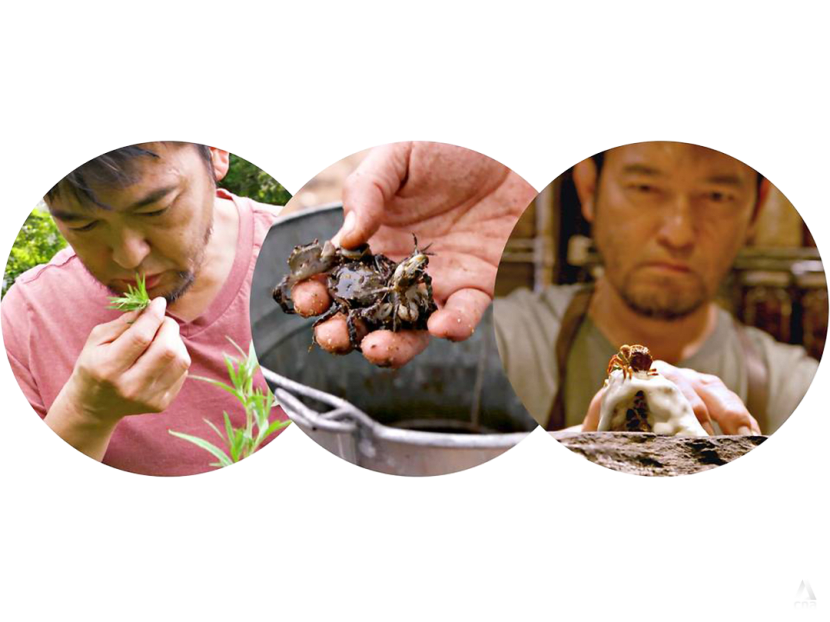
Chef Bun Lai was a pioneer of the sustainable sushi movement. (Photo: Threesixzero Productions)
22 January 2022 06:30AM (Updated: 16 Aug 2022 03:20PM)
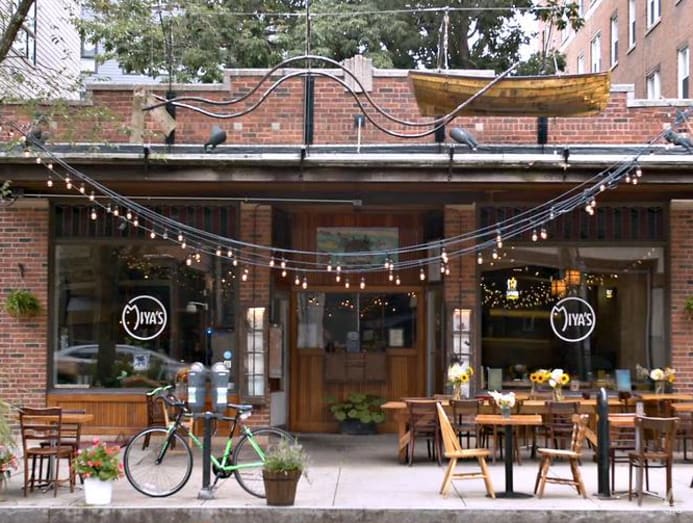
Miya's Sushi may be a lilliputian family-run hole in the wall, only this Japanese diner in New Haven, Connecticut, is the proud recipient of the 2022 White House Champions of Modify Accolade for its sustainable practices. In fact, it prides itself as being the first sustainable sushi restaurant on Globe, and is today one of iii most sustainable restaurants in the United states.
This is all cheers to Chef Bun Lai, whose passion for the environment and social activism made him reinvent the globe of sushi to promote ethical eating.
"The human appetite has been the virtually subversive force on earth. Information technology'southward straight related to the extinction of other creatures. We eat too many animals, particularly farmed animals and fish that is not fished in a way that is ethical," he said.
His intention for Miya'south is to imagine a cuisine that is healthier for the body and the planet.
READ> How Singapore's restaurateurs are rising to the challenges of sustainability
"Food is the most intimate affair because you lot're putting something from the outside into your trunk and ultimately it feeds every cell in your body, that food becomes y'all," he waxed lyrically.
Miya's, which Bun runs together with his mother and sister, opened in 1983 every bit a catering business serving Kyushu-style recipes, and gradually became New Haven's first traditional sushi restaurant.
By the belatedly 90s, its menu had become 80 per cent plant-based, and traditional sweetened white rice was replaced with a whole grain brown rice-based blend. One of its most famous creations is the sweet potato whorl – a vegetarian's equivalent of the California Gyre.
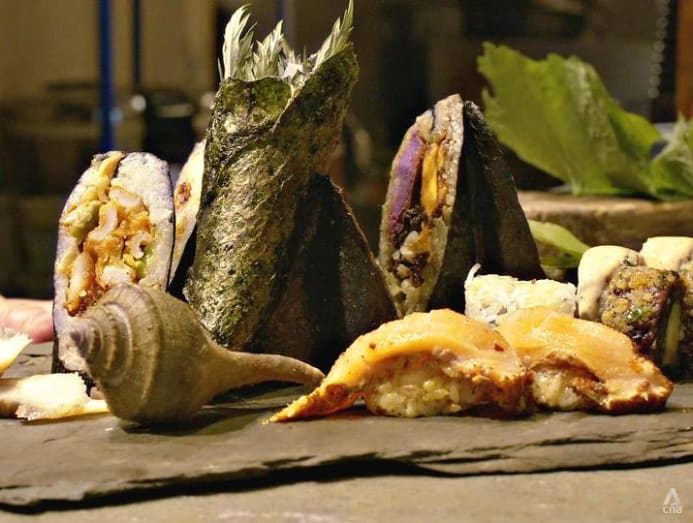
In 2001, Bun initiated the removal of seafood that was caught or farmed in a way that was detrimental to the long term wellbeing of the harvested species or its habitats. In other words, all your sashimi favourites from classic salmon and shrimp to tuna and yellowtail were no longer served.
This acquired a major prototype shift in the way sushi was consumed. And not everyone was happy well-nigh information technology.
"We take guests who come in and run out the door before they even try our food because it's not what they expect sushi to be. They wanted tuna and everything else that we didn't deport," shared Bun. "Or just a archetype shrimp roll," added his sister, Mie.
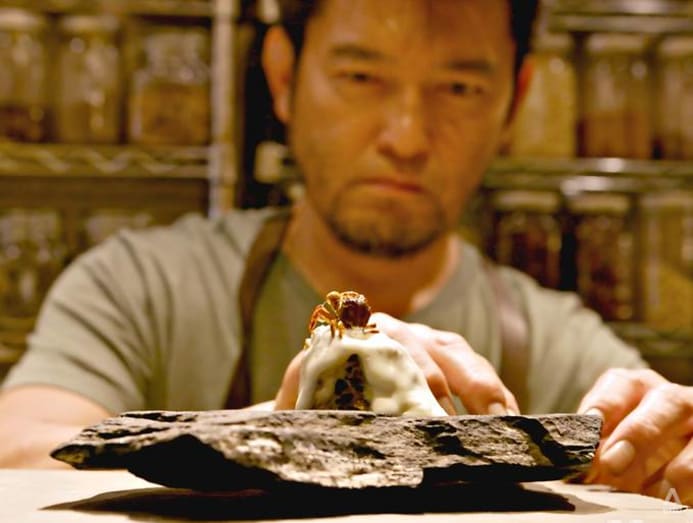
The new possibilities that Bun speaks passionately about are the invasive species that he incorporated to the card in 2005. But what exactly are they? Aliens? Close, actually. Invasive species are defined as plants or animals that are not native to a specific location, often introduced from overseas, and which accept a tendency to spread to a degree that may pose harm to the local ecosystem.

Miya'southward invasive species card was created in club to accept pressure off of pop over-fished species, by utilising ones that are abundant but ecologically subversive.
"Because of climatic change, nosotros're gonna have vast famines in the globe, so the thought is to cultivate invasive species that are already there that you lot cannot perhaps get rid of," he explained.
"The next level for a chef is to be well-versed in sustainability. How are the recipes you lot're making impacting the people y'all're cooking for, [and also] everything else on the planet?"

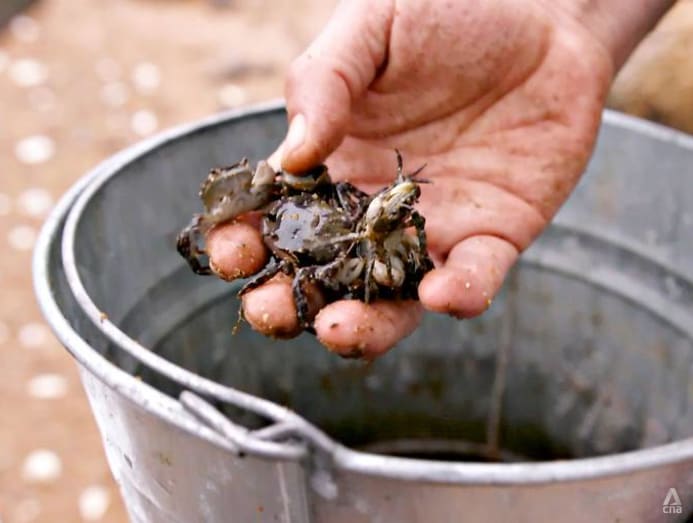
Whatever is served on the menu is foraged by Bun and his sister, who spend Sundays and Mondays fishing for edible finds around the estuaries of Long Island Sound. It's not unusual to see them flipping rocks to find small crabs and sea snails, diving for seaweed, or casting a net to catch smelt.
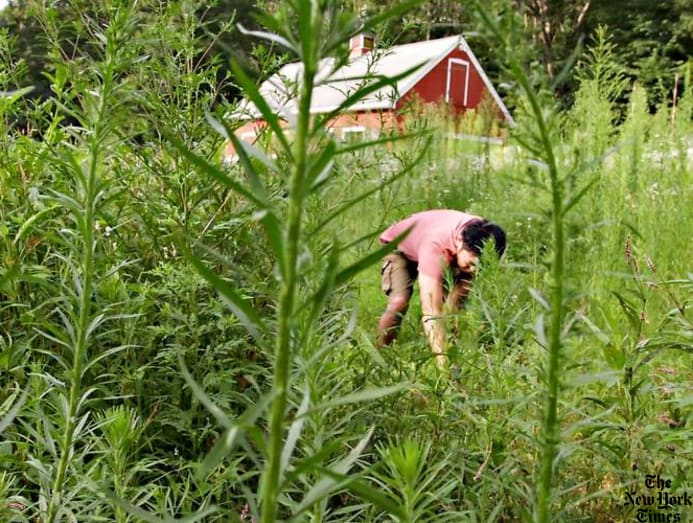
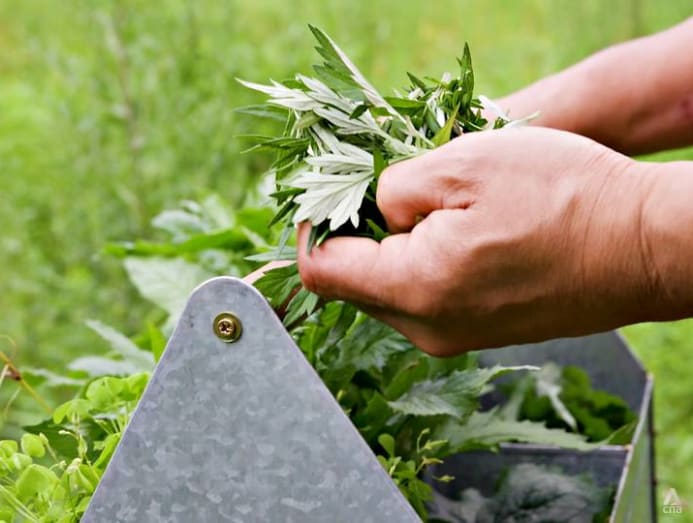
The son of Chinese and Japanese immigrants, Bun'southward love for science, nature and foraging was cultivated by his parents from an early historic period. He even keeps a garden dedicated to wild plants which he harvests subcontract-to-tabular array style. Some of his favourite greens to employ for sushi include wild lettuce, sorrel, nettle, mustard garlic, and mugwort.
"Wild plants are exponentially more than nutritious than anything we tin possibly abound. Weeds like these tin withstand the fluctuation of weather condition patterns that are unpredictable," he revealed.
In improver to seafood, you'll likewise observe grasshoppers, larvae and mealworms on Miya's menu.
"If you lot're gonna eat an animal, at that place'south aught healthier for you and the environment than to swallow a wild insect like this!" he enthused, biting into a live grasshopper.
"When we effort to change our ways to a meliorate mode, i that is more than restorative and nurturing to nature and other people, I tin't remember of anything more important to do. And I retrieve nosotros're doing it in a tiny lilliputian way," he attested.
"Miya in Japanese means shrine, a holy infinite where spirits and holy objects are kept. So we've always felt that way about Miya's. That it wasn't just food that we're doing, that nosotros're doing so much more than than that," he concluded.
Adjusted from the series Remarkable Living (Flavour 3). Watch full episodes on CNA, every Sunday at 8.30pm.
Disclaimer: This video was filmed before the COVID-nineteen pandemic.
READ> Singapore's elevation restaurants buy their produce from local farmers; and so should you lot
Source: https://cnalifestyle.channelnewsasia.com/remarkableliving/chef-bun-lai-miya-s-sustainable-sushi-new-haven-246716
0 Response to "Who is the mastermind behind the world’s first sustainable sushi restaurant?"
Post a Comment